

How to Brief a Content Writer: What to Include and Why
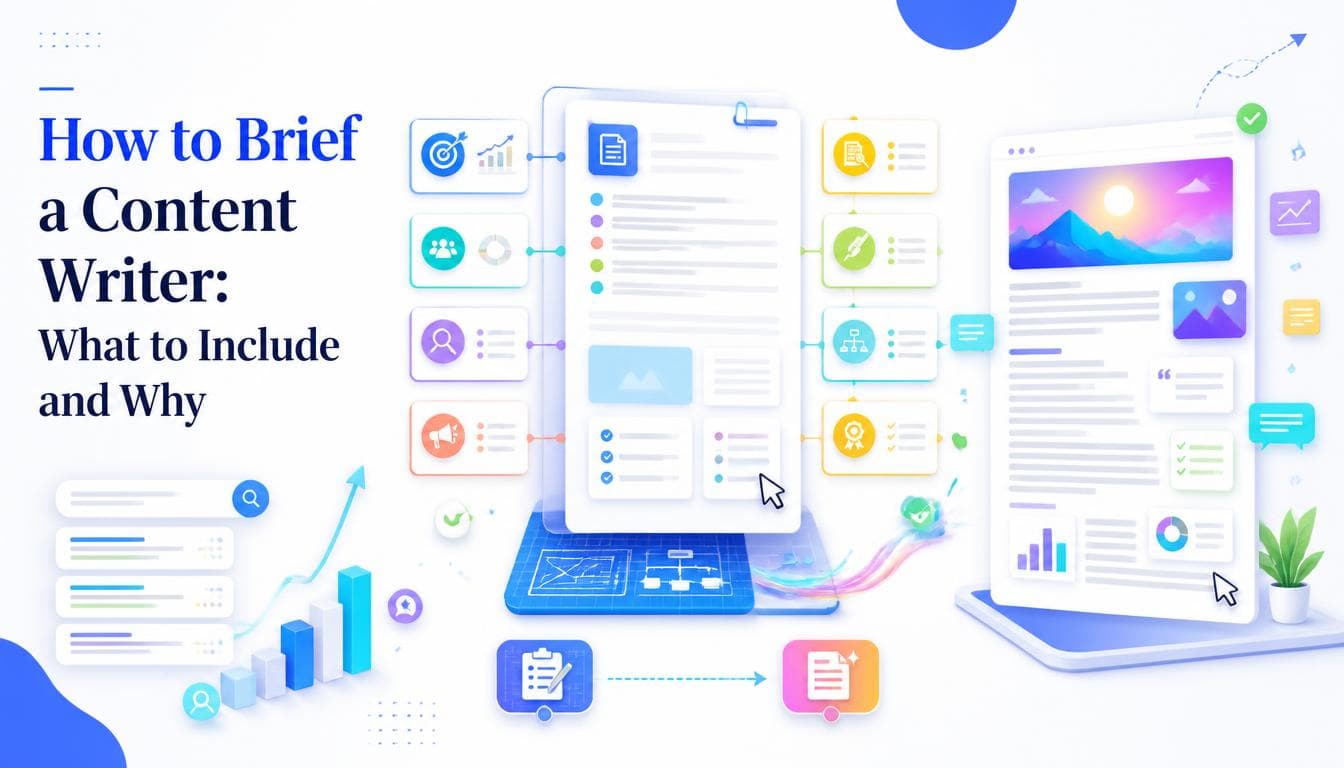
Most disappointing first drafts are not the writer's fault. They are the brief's. A writer handed a topic and a word count will fill both, but they cannot guess who the piece is for, what it needs to achieve, what you know that the internet does not, or which claims your business can actually stand behind. Learning how to brief a content writer well is the fastest way to cut revision rounds and get content that sounds like you. This guide walks through what a good brief contains, section by section, and why each part earns its place.
Why the brief matters more than the writer
A strong writer with a weak brief produces something competent and generic. A decent writer with a strong brief produces something specific and useful. The brief is where your expertise, your customers questions and your commercial goals get transferred into the work. Everything the writer does not receive, they have to invent or research from the same public sources your competitors used.
A brief also protects you. It sets the standard the draft is judged against, so feedback becomes "this section does not answer the second question in the brief" rather than "it does not feel right".
What to include in a content brief
The goal of the piece
State what the content should do, in one sentence. Rank for a specific query and bring in qualified readers. Help a sales team answer a recurring objection. Explain a new service to existing customers. The goal decides the format, the depth and the call to action, so it comes first.
The reader
Describe who will read it: their role, what they already know, what they are trying to decide, and what worries them. "Clinic managers comparing booking systems who have been burned by a bad migration before" gives a writer far more to work with than "healthcare businesses".
The search intent and target query
For content meant to rank, give the primary query and what the searcher actually wants from it. Is it a definition, a comparison, a how to, a list of options? Include a few related questions people ask around the topic and the pages currently ranking, so the writer can see what the result type looks like and where the gaps are.
This is where content writing and on-page SEO meet. The brief should say which page on your site this piece is for, so it does not end up competing with an existing page for the same query. If you are unsure how that works, our guide to what on-page SEO is explains intent and cannibalisation.
Key messages and the angle
List the three to five points the reader must come away with, in priority order. Then say what your angle is: the opinion, method or experience that makes your piece different from the ten that already exist. Without an angle, the writer will produce a summary of what already ranks.
What you know that nobody else does
This is the most valuable part of any brief and the one most often left out. Give the writer your raw material: how your team actually does the work, the questions customers ask on sales calls, the mistakes you see clients make, examples you are allowed to share, internal data you are happy to publish. A short recorded conversation with a subject expert often gives a writer more than pages of notes.
Sources and claims
Point to the sources you trust and flag any you do not. Be explicit about claims: what can be stated, what needs a citation, and what must not appear at all, such as unverified statistics, guarantees or client names you do not have permission to use. In regulated fields like healthcare and finance, include any compliance rules the writer must follow.
Voice and style
Share your tone of voice guidelines if you have them, and two or three existing pieces that sound right. If you do not have guidelines, describe the voice in contrasts: expert but not academic, direct but not blunt, warm but not casual. Note the practical rules too: British or American spelling, how you refer to your own company, words you never use.
A settled voice is usually the product of settled branding. If yours is still shifting, that is worth fixing at the source; our guide on choosing a branding agency for your startup covers how voice fits into brand work, and our graphic design and branding team works on identity and messaging together.
Structure, format and length
Suggest an outline if you have one, or at least the sections you expect. Say where the piece will live: a blog post, a service page, a landing page, a downloadable guide. For web pages, note any layout constraints from the design, such as headline length or the number of feature blocks, so the copy fits the build. When content and layout are planned together, as in our web development projects, fewer words get cut to fit a box.
On length, give a range rather than a target, and say that covering the topic properly matters more than hitting it.
Links and calls to action
List the internal pages the piece should link to, the anchor topics you want, and the single action you want readers to take at the end. Writers cannot guess your site structure, and internal links are one of the easiest SEO wins to get right at the drafting stage.
Logistics and definition of done
Include the deadline, the number of revision rounds, who gives feedback, and who has final sign off. Then define done: meets the goal, answers the listed questions, uses approved claims only, fits the format, and is ready to publish without a rewrite.
Common briefing mistakes
- Giving a topic instead of a goal, so the writer has to decide what success means.
- Describing the audience as "everyone" or "businesses".
- Leaving out your own expertise, then being disappointed the draft sounds generic.
- Asking for a word count with no mention of what the piece must cover.
- Sending feedback from several people who disagree with each other.
- Changing the goal after the first draft instead of updating the brief.
Reviewing the draft against the brief
When the draft comes back, review it against the brief before reacting to it as a reader. Does it hit the goal? Does it speak to the reader you described? Does it answer the questions, carry the key messages and include your angle? Feedback tied to the brief is faster to act on and less likely to go round in circles. If the draft reveals that the brief was wrong, fix the brief first, then the draft.
Once the piece is live, a good brief also makes review easier later. You can check whether it achieved the goal it was written for, not just whether it got traffic. And if you are writing website pages rather than articles, our guide to website content writing that converts covers the page by page detail.
Our content writing service starts every piece with discovery and research into your audience, your competitors and the search intent behind each topic, so the brief is built before the writing begins.
Frequently asked questions
What should a content writing brief include?
A good brief includes the goal of the piece, a clear description of the reader, the target query and search intent, key messages and angle, your own expertise and examples, approved sources and claims, voice guidelines, format and structure, internal links and a call to action, and deadlines with a clear definition of done.
How long should a content brief be?
Long enough to answer the questions a writer would otherwise have to guess. For a single blog post, a page or two is often enough, plus any source material. What matters is that the goal, reader, intent and your unique expertise are covered.
Should I give a writer a word count?
Give a range rather than a fixed number, and make clear that covering the topic properly matters more. Fixed word counts encourage padding when the topic is covered early, or cutting important detail when it is not.
How do I brief a writer for SEO content?
Include the primary query, what searchers want from it, related questions, and the pages that currently rank. Say which page on your site the content is for so it does not compete with an existing page, and list the internal links to include. Then let the writer focus on answering the query better than the existing results.
Written by the Getweys studio: Austin, Karachi, Auckland.